| 📋 8 season two guests, 3 Playbooks from their ideas, 1 look at what's next |
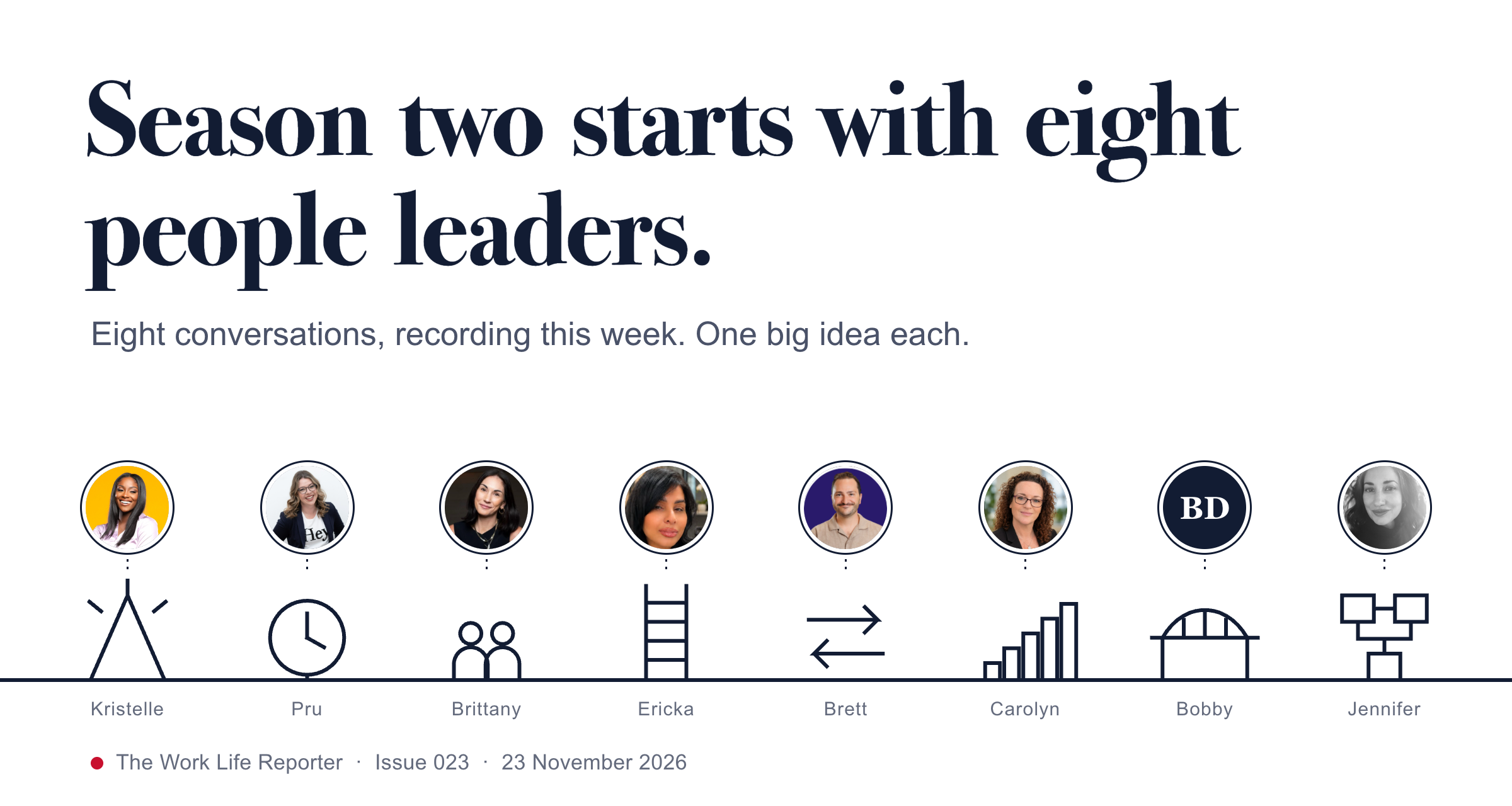
Season two of The Work Life Reporter is here. This week, eight people leaders sit down with us to record their conversations, and this issue introduces every one of them. The line-up stretches from Atlanta and Los Angeles to the UK and, a first for the season, Australia. Each of them is bringing one big idea, and we think you'll want to hear every one. |
State of Product reveals what AI still hasn't solved.80% of product professionals say AI helps them ship faster, but customers aren't seeing value any sooner. Atlassian's State of Product 2027 explores the gains AI is delivering and the challenges that remain, from decision-making that hasn't kept pace to gut instinct overriding customer evidence. Sponsored by Atlassian · Jira Product Discovery |  |
|
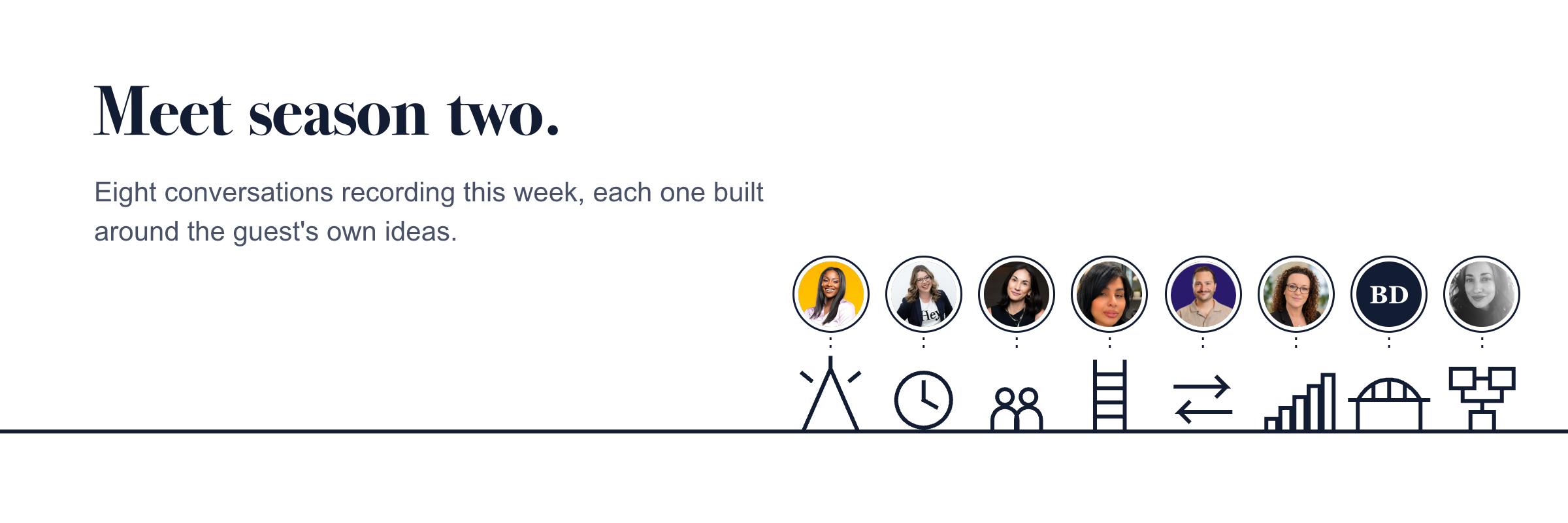 |
| Kristelle Beecher, PhD, MBAFounder, The Creative Corporate · Atlanta, Georgia | LinkedIn → |
“Stop forcing your design into someone else's.” |
Kristelle is an award-winning organisational psychologist and a Forbes Council member, with more than a decade in HR, people operations and inclusion. She holds a PhD in psychology and an MBA in human resources. She coaches the whole person, not the "employee mask" people wear from nine to five, and her Brilliance Spectrum framework looks at how well a person's natural strengths fit their role. Topics: Job hugging and quiet cracking · Finding your zone of genius · Mental health as a performance conversation | | Pru KillickHead of People and Culture, EngageRM · Newcastle, Australia | LinkedIn → |
“Five hours back. What do we do with them?” |
Pru is season two's first guest from Australia. She has more than 20 years in HR across SaaS, a scale-up through an acquisition, local government and education, and was recently Acting CEO and a Non-Executive Director at Atwea College. Her question: if AI gives every person on a lean team five hours a week back, does that mean the same work with fewer people, or bigger roles for the same people? She argues for choosing the second, on purpose. Topics: When AI comes up and the room goes quiet · Path A or Path B · Leading change from three different seats | | Brittany RamseyHead of People and Culture, Her Campus Media · Columbus, Ohio | LinkedIn → |
“Community is the future talent pipeline.” |
Brittany trained as a therapist, with a master's in clinical counselling, before moving into recruitment. She spent more than five years at L'Oréal, rising to Director of Early Career Recruitment, and founded BWell Careers. At Her Campus, which is fully remote and global, she owns organisational design, talent strategy and HR's move into AI and automation. Her view: as AI writes and screens applications, community and real connection will set great recruitment apart. Topics: Community as the pipeline · Connection in the age of AI · The human side of hiring | | Ericka BryantSVP, People and Culture, Marietta Country Club · Atlanta, Georgia | LinkedIn → |
“Succession starts long before the role opens.” |
Ericka is an enterprise HR strategist and an executive adviser on organisational effectiveness, and she has helped organisations through growth and change across several markets. When a business grows, her first question is who we're preparing to lead what comes next. She believes culture shows up in everyday decisions: who gets honest feedback, who gets a stretch assignment, and who gets considered for the next leadership role. Topics: Culture in everyday decisions · Managers as the talent engine · Career paths people can actually see | | Brett BrawermanSenior Managing Director, People and Culture, Intercare Therapy · Los Angeles, California | LinkedIn → |
“High trust is built in both directions.” |
Brett calls himself a culture architect. He was Head of Culture at Feedonomics through its acquisition by BigCommerce, and is a former change management consultant at ICF Next. He says he has never been able to feel awkward, which turns out to be useful for building trust. He believes the best people strategy is aligned to the business strategy, and that trust comes from real two-way channels. Topics: Two-way channels people actually use · Keeping culture through an acquisition · People strategy as business strategy | | Carolyn ColeLucion Group · United Kingdom | LinkedIn → |
“One workplace, five generations, no shared rulebook.” |
Carolyn's career runs across private-equity-backed businesses, smaller organisations and the charity sector. She's interested in today's five-generation workplace, from boomers to Gen Z, and in the gap between how work is perceived and how it really is. That includes the skills nobody teaches any more, like making a phone call, leaving a voicemail or writing a professional email. She'll also get into what changes when AI arrives in a hands-on business. Topics: Five generations under one roof · AI in a hands-on business · Mental health across the generations | | Bobby DuttonHead of People and Culture, Vibe Arcs | LinkedIn → |
“What people really need from work now, and who has to deliver it.” |
Bobby sits where the big questions meet: what the business needs, what people expect, and how to make the two fit. Topics: How the people job has changed · Managers making or breaking it · Going from listening to action | | Jennifer HouleVP, People Operations, Raven Indigenous Capital Partners | LinkedIn → |
“Most workplace problems aren't people problems. They're systems problems.” |
Jennifer has spent her career in HR, and she writes and speaks about broken workplace systems and the future of work. The idea that runs through her writing gives her episode its title: look at the system before you blame the person. She'll also take an honest look at where the future of work is heading, and what HR's part in it should be. Topics: Where work systems break · HR as designer, not enforcer · When values have to show up in the system |
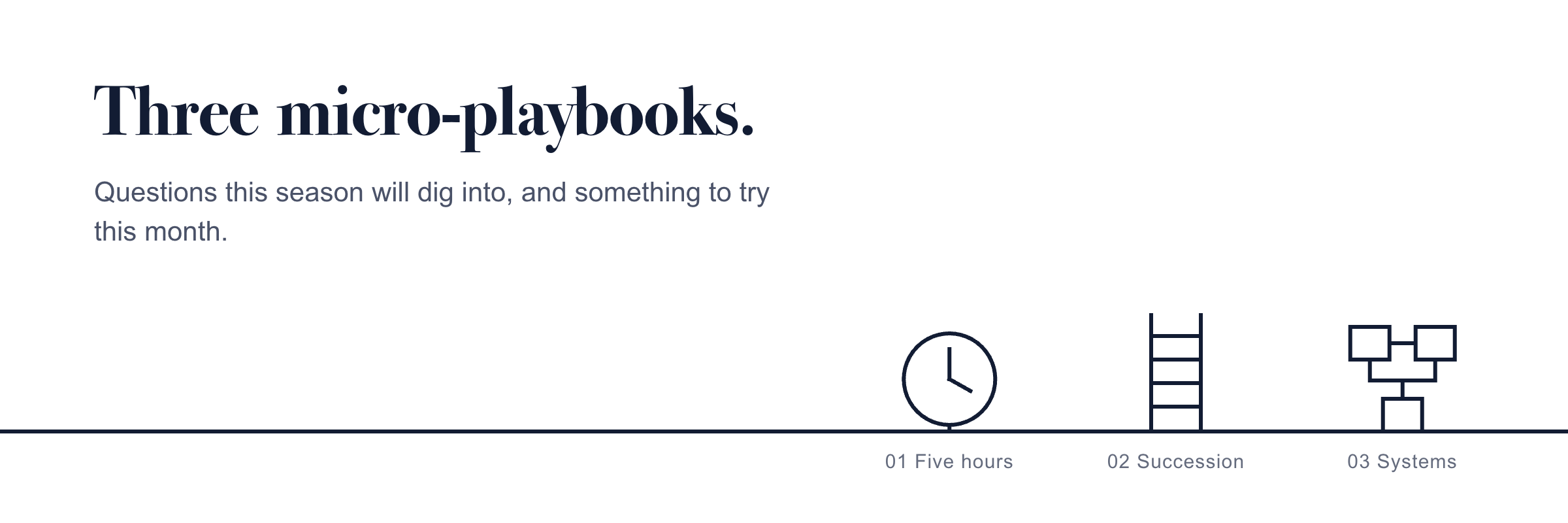 |
01 Decide where the five hours go.A question Pru Killick will dig into this season: if AI gives every person on a lean team five hours a week back, what happens next? She describes two paths. Path A is the same work with fewer people. Path B is bigger roles for the same people. It's easy to end up on Path A without anyone choosing it. If nobody decides what the time is for, it gets absorbed by more meetings and more email, until someone asks why the team still needs the same headcount. Try this month: pick one team that already uses AI day to day. Ask each person roughly how many hours it gives them back each week, then agree together where at least half of that time goes, whether that's a skill to build, a parked project or work closer to customers. Write it down, share it with the team, and check back in four weeks to see where the hours actually went. | 02 Succession happens in ordinary weeks.A question Ericka Bryant will dig into this season: who are we preparing to lead what comes next? Her view is that culture shows up in everyday decisions, like who gets honest feedback, who gets a stretch assignment and who gets considered for the next leadership role. That makes succession less about a plan in a drawer and more about a pattern you can see if you look for it. If the same few people keep getting the stretch work, that's your succession plan, whether anyone wrote it down or not. Try this month: sit down with two or three managers and list the stretch assignments handed out last quarter, and who got them. Do the same for honest, specific feedback conversations. Look at who's missing, then give one stretch assignment to someone who hasn't had one, with a clear brief and a date to check in. It's a small move, and it's how succession starts long before the role opens. | 03 Fix the system before the person.A question Jennifer Houle will dig into this season: what if most workplace problems are systems problems, not people problems? It's the idea behind her writing on broken workplace systems. You can spot a broken system by its workarounds. When people keep a private spreadsheet next to the official tool, chase approvals over chat, or put off a review because the form doesn't fit the job, the process is telling you something. And when the same mistake keeps happening with different people, it's worth asking what the process makes easy, and what it makes hard. Try this month: ask your team one question. What's one process you work around? Pick the most common answer, map how it really runs next to how it's meant to run, then change one thing: cut a step, move an owner or rewrite a form. Ask the same people a month later whether it's better, and tell them what you changed and why. |
 |
These eight are the first group, not the whole season. Over the coming weeks, more people leaders from more organisations and more countries will join, and we'll spotlight each guest and what they've built here as their conversations land. Every conversation is relaxed and pre-recorded, about thirty minutes, with no script and no questions sent in advance, and every guest sees the edit before anything goes out. Full episodes go out on YouTube and LinkedIn, with clips on LinkedIn and highlights here. They're coming soon, and you'll hear first, here. |
Which conversation are you most looking forward to?Last week you told us how your organisation marks work anniversaries: a monthly team post 33%, individually by each manager 33%, milestone years only 17%, not yet 17%. 6 answers, totals only. Your answer is confidential, not anonymous: it is linked to your subscriber profile, which only the TWLR team can see. We publish only totals, never names or companies. You can ask us to delete your answers at any time. How we handle your answers. |
|